Circular economy
Crash course Circular Economy / Plain text circular economy
What exactly is the circular economy? It is the reuse of all components of a product in the same quality and for a new product of equal value.
We do not have infinite resources and must therefore use them sparingly - that is the essence of circular economy. Obvious, isn't it?
Even if it is obvious and on everyone's lips at the moment, this message has still not reached everyone. The business sector in particular is still struggling to switch from old habits to the new requirements. The economy accounts for a lion's share of the raw materials consumed worldwide. Added to this is the energy needed to produce and transport goods.
The decisive factor here is that products are produced far in excess of demand and are disposed of far too quickly. This not only creates unnecessary mountains of waste, but also drastically increases the scarcity of raw materials and global warming.
The rarer and scarcer raw materials become in nature, the higher their price. Products would therefore inevitably become much more expensive.
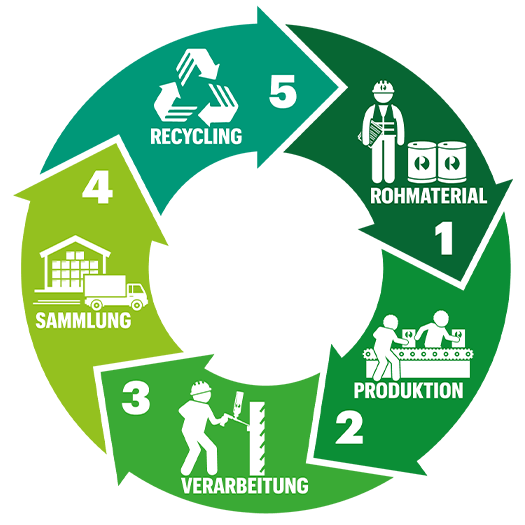
How do we get to grips with this?
We will only succeed in doing this by completely rethinking our approach. We will only be successful if we all consistently rethink our consumption and change our behavior.
What do we need to do better? On the economic side, no more overproduction and no more linear economy. Production will be based on demand and the economy must keep recycling conformity in mind as early as the product innovation stage.
But we consumers are also in demand. We need to move away from the throwaway mentality as quickly as possible towards an awareness of sustainable and regional products. And we must dispose of what we consume correctly.
What do we gain from this? More than enough! Our waste can be recycled. This significantly reduces the amount of waste. At the same time, we exploit fewer raw materials and thus actively protect our environment. At the moment, more than 60% of natural raw materials are not recycled. They are lost forever. Unbelievable, isn't it? In addition, the circular economy ensures that our CO2 footprint is greatly improved.
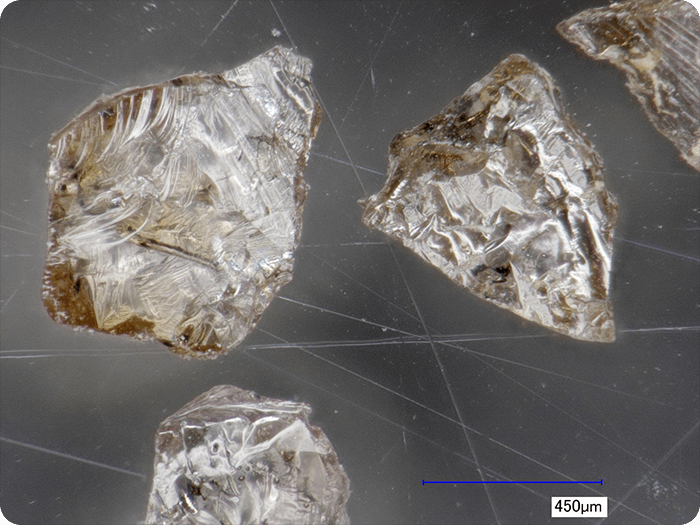
In a nutshell: at PDR, we have been living the circular economy for almost 30 years and have always been convinced that it is the only way to go. Our recycling solutions for used PU foam cans and printer cartridges help to conserve resources on a daily basis. At the same time, we are constantly striving to find new recycling solutions for other used products and production waste. One example of this is the recycling of waste from the production of abrasives. Together with external partners from science and industry, we have developed an innovative recycling process for this.
Circular economy and nature - how do they go together?
Nature was there before us and is a treasure trove for humans in many respects. It not only provides us with a place to survive, but also shows us how the circular economy can be put into practice. Because nothing is wasted in nature. Everything is subject to a recurring cycle and has a very specific function.
Nature serves as an inexhaustible source of inspiration for new product solutions. Take, for example, the self-cleaning effect for surfaces based on the example of lotus petals, the principle for adhesive films based on the overhead hanging of geckos or façade blinds without joints such as the folding trick of the paradise flower.
Indigenous peoples also set an example of how to use valuable raw materials responsibly: you only take what you actually need to survive and recycle it completely without throwing anything away. This is the circular economy at its best.
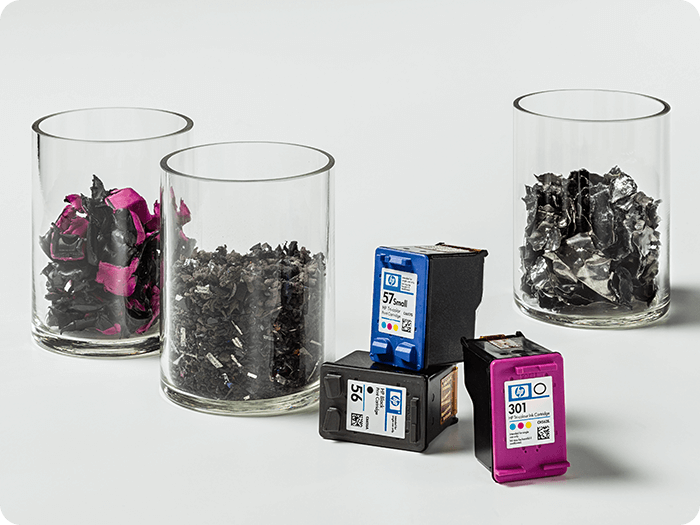
As with the recycling of printer cartridges at PDR: they are sorted and separated by type to guarantee a high level of purity of the recovered raw materials and products. Precious metals, high-quality plastics and steel are recovered in a multi-stage recycling process. These are then returned to the production cycle. This is how the circular economy works.
Insider knowledge: What is behind "RRR"?
Who hasn't heard it yet? The catchy English slogan, also known as the 3R principle: Reduce, Reuse, Recycle.
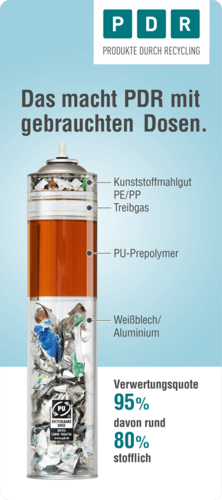
Take the assembly foam can, for example. We don't just recycle what's "around" it, but also what's "inside" it. Our general recycling rate is 95%. Around 80 % is recycled materially. With around 24 million construction foam cans sold in Germany every year, that's quite a lot.
The recycled PU prepolymer is reused in the production of new construction foams. A closed cycle. Aluminum/tinplate goes into the smelting process and is melted down. We process the PE and PP plastics into plastic regrind and pass them on to the plastics industry. The propellant gas is passed on to the aerosol industry. Even the outer packaging, i.e. the cartons - our own free return cartons - are reused for as long as possible.
Proper disposal is therefore a win-win situation for us all!
Circular Economy - Born to be a winner!

Is it even worth the effort? Believe it or not, there are still doubters who ask this question. Our answer is a resounding YES.
Who really benefits from the circular economy? The fact is, we all benefit from it. In contrast to the previous model, where industry is the biggest beneficiary because we all buy too much too often, which we then throw away too quickly. But if we consistently pursue a circular economy, we are all on the winning side.
Our consumption: sustainable products last longer, are easier to repair and are of higher quality and healthier. We also support our region. We also reduce CO2 emissions from transportation.
Our climate: If the economy does not produce excess quantities, avoids long transportation routes and uses reusable materials, it can reduce large quantities of environmentally harmful emissions in one fell swoop and conserve valuable resources. This is the only way to put a stop to global warming.
Our environment: Responsible use of natural resources protects our planet and preserves a healthy living environment for future generations. Turning away from the throwaway mentality and the sheer desire to consume will restore the necessary balance to the fragile ecological structure and protect species diversity and biodiversity.
We can do it if we all pull together! Circular economy first!
Every individual is a cog in the circular economy. Only together can we consistently implement a circular economy.
The bottom line: choose recyclable products when you buy them, separate waste correctly and consume consciously. Then we have already done a lot of things right.
Details on correct waste separation here.
Details on correct waste separation here.